



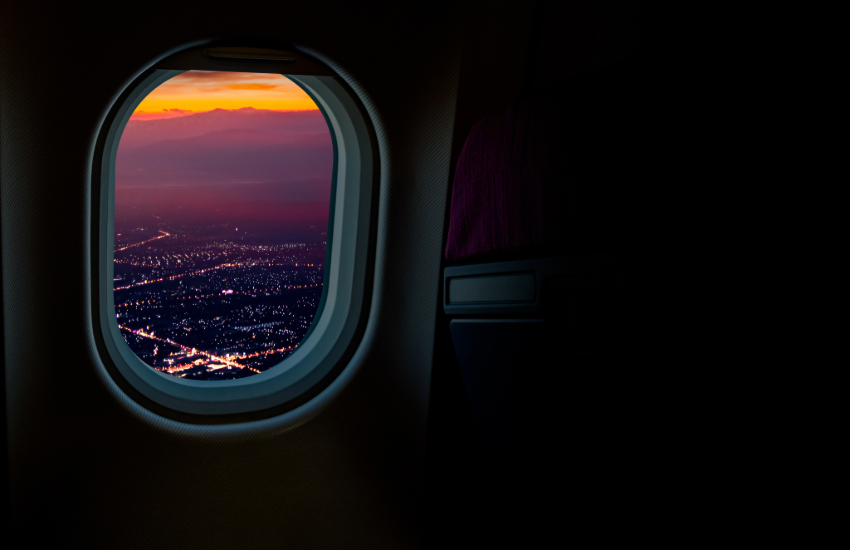
Flying overnight sounds brutal until you realize what you’re actually getting: a cheaper fare, a full day at your destination, and no wasted vacation time staring out a window at clouds. The catch, of course, is that you have to sleep in a metal tube at 35,000 feet surrounded by strangers.
Done right, a red eye flight is one of the smartest travel moves you can make. Done wrong, you show up to your destination looking like you lost a fight with a time zone. These red eye flight tips will make sure it’s the former.
What Is A Red Eye Flight?
A red eye flight is any flight that departs late at night, typically between 9 p.m. and 1 a.m., and arrives at its destination the following morning. The name comes from the bloodshot eyes passengers tend to sport upon landing, a telltale sign of a night spent trying (and mostly failing) to sleep upright in economy class. Red eyes are most common on long coast-to-coast routes like New York to Los Angeles, but you’ll find them on international corridors and shorter domestic hops too.
Red Eye Flight Tips
1. Choose your seat strategically
Window seat, every time. You control the shade, you have a wall to lean against, and nobody will tap you on the shoulder at 2 a.m. asking you to move. If you’re traveling as a pair, book the window and middle seat. The aisle is the worst position for sleeping and the best position for getting bumped by the drink cart.
If your budget allows, even a basic premium economy upgrade can be the difference between arriving refreshed and arriving wrecked. Extra recline matters more on overnight flights than almost any other route.
2. Set up your sleep station before takeoff
This is one of the most underrated red eye flight tips and the one most people skip. Don’t wait until you’re airborne and the cabin lights are off to start digging through your bag. As soon as you sit down: headphones on, eye mask in the seatback pocket, neck pillow inflated, light layer ready. Treat it like a pre-sleep ritual, because it is one. The faster you signal to your brain that it’s time to wind down, the faster you’ll actually fall asleep.
3. Pack your carry-on like you’re only sleeping
Everything you don’t need for the flight itself should be in the overhead bin before you even sit down. Your personal item under the seat should only have sleep essentials and anything you’d want at your destination in a pinch. The less you’re rummaging, the better. Which leads to a bigger point: the lighter you travel overall, the smoother the whole experience gets.
If you’re a golfer flying to a destination course, a skier heading to the mountain, or a family hauling strollers and sports gear, consider shipping your equipment ahead with a service like Ship&Play. Your bags and gear arrive at your destination before you do, you check in with just a carry-on, and boarding a red eye becomes genuinely easy. No overhead bin negotiations, no baggage claim at 6 a.m. Just grab your stuff and go.
4. Eat a real dinner before you get to the airport
Red eye meal service ranges from mediocre to nonexistent, and eating a heavy airport sandwich at 10:30 p.m. is not going to help you sleep. Have a proper, balanced dinner before you leave for the airport, and resist the terminal snack impulse. If you’re hungry on the plane, a light snack is fine. Just avoid anything too heavy, greasy, or salty, all of which will make the cabin dehydration worse.
5. Ditch the in-flight alcohol
This is one of those red eye flight tips that nobody wants to hear. The pre-flight drink feels relaxing, but alcohol is one of the worst things you can consume before trying to sleep at altitude. It suppresses REM sleep, dehydrates you faster than usual in the dry cabin air, and tends to cause you to wake up a few hours in feeling worse than if you’d never fallen asleep at all. Drink water—more than you think you need—and save the celebratory drink for when you land.
6. Dress for sleep, not the street
Wear soft waistbands, loose layers, and slip-on shoes you can kick off the second you sit down. A zip-up hoodie is underrated—it doubles as a blanket, a pillow, and, if you’re desperate, something to pull over your face. Compression socks are worth packing for anyone on a longer red eye; they keep circulation moving and prevent that heavy, swollen-leg feeling when you deplane.
7. Travel with the right sleep aids
A proper red eye kit includes: noise-canceling headphones (not foam earplugs, actual noise cancellation), a contoured eye mask that blocks light from every angle, and melatonin. On melatonin specifically: most over-the-counter doses are far higher than necessary. Research consistently shows that 0.5–1mg is enough to shift your circadian rhythm and cue sleep. The 10mg doses common at drugstores are more likely to leave you groggy on arrival than well-rested.
8. Reset your clock the moment you sit down
Change your watch or phone to your destination’s time zone before the plane even pushes back from the gate. Then make a conscious decision based on what time it is there: if it’ll be daytime when you land, try to sleep on the flight so you can stay awake through the day and crash properly that night. If it’s evening when you land, sleep on the plane no matter what. Committing to the new time zone mentally, even before you arrive, gives your body a head start on adjusting.
9. Tire yourself out the afternoon before
Get some exercise before your red eye, even if it’s just a long walk. Physical activity accelerates sleep onset and deepens sleep quality. What you want to avoid is the tempting pre-flight nap, especially a long one. A two-hour nap at 4 p.m. will have you wide-eyed at boarding time and completely unable to fall asleep once you want to. Stay active, eat well, skip the nap, and board actually tired.
10. Limit caffeine from early afternoon onward
Cut caffeine by around noon or 1 p.m. on the day of your red eye. Caffeine’s half-life is roughly five to six hours, which means a 3 p.m. coffee is still actively working against you when you’re trying to fall asleep at 10 p.m. If you need a pick-me-up before heading to the airport, go for it early, just give it time to clear your system before you board.
11. Have a plan for when you land
The recovery from a red eye is just as important as the flight itself. Get outside and into natural daylight as fast as you can. It’s the most powerful circadian reset available and will do more for your alertness than any amount of coffee. If you need a nap, wait until at least midday and keep it under 30 minutes. Any longer and you risk feeling worse and disrupting your sleep that night. Plan something to look forward to in those first few hours, like a great breakfast spot, a walk somewhere scenic, a morning tee time. It reframes the red eye from something you endured into a launchpad for the trip.
12. Give yourself grace at the gate
No matter how well you execute these red eye flight tips, you’re still going to step off that plane a little rough around the edges. That’s okay. Build buffer time into your first day. Don’t schedule a high-stakes meeting or a long drive for the morning you land. Give yourself an hour or two to shower, eat something real, and let your body catch up. You’ll be back to full capacity faster than you think.
A red eye is a trade: a few hours of imperfect sleep in exchange for an extra full day at your destination and usually a cheaper fare. Most people make it harder than it needs to be by overpacking, overthinking, and showing up underprepared. Nail these red eye flight tips—travel light, sleep intentionally, reset your clock early—and overnight flights stop feeling like a sacrifice and start feeling like a strategy.